All Trip Guides
    Unexpected Golf Trips · OklahomaTulsa metro, Sand Springs & Catoosa

    The Tulsa Golf Trip Hiding in Plain Sight

    Tulsa's public golf map combines Perry Maxwell lineage, canyon terrain, skyline views, and city-owned depth. This is the practical three-round trip hidden inside it.

    Tulsa firsthand context + independent course researchReviewed September 13, 2026

    Opening verdict

    Tulsa earns a closer look.

    Tulsa is the golf trip hiding behind a city without a standard golf-destination reputation. Within a practical metro cluster, a golfer can move from sandstone ridges and ravines to a Perry Maxwell design lineage and then choose between two city-owned 36-hole facilities.

    The verdict is a focused three-round discovery trip. Tulsa gives a traveling group enough contrast, public access paths, and geographic logic to justify the journey. It delivers surprise and variety, with a different job from a famous golf resort.

    Oklahoma statewide is too broad for one honest golf-trip guide. The useful story sits around Tulsa, with Sand Springs and Catoosa as purposeful extensions rather than reasons to stretch the map.

    Why Tulsa is unexpected

    The surprise is the contrast.

    The case for Tulsa does not come from collecting every course in Oklahoma. It comes from finding a useful sequence inside one metro area, then asking what kind of golfer will appreciate that sequence.

    01

    Discovery over prestige

    A traveler who starts with a famous golf shortlist may skip Tulsa before looking at the map. The reward here is the feeling of finding a real golf place before it becomes a default answer.

    02

    Terrain that changes the picture

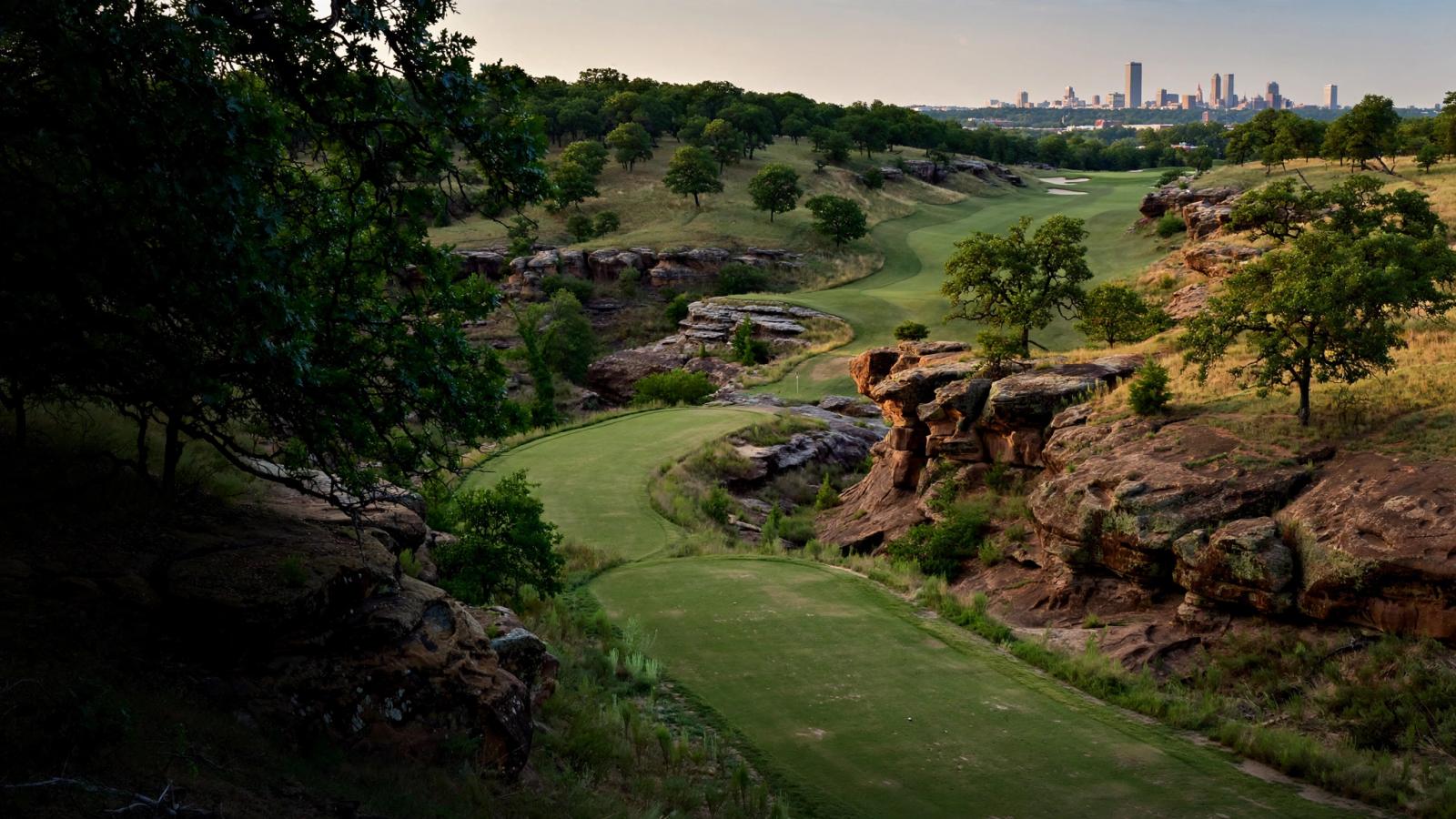
    The Canyons' wooded hills, sandstone outcrops, ravines, elevation changes, Arkansas River Valley, and skyline views give the opening round a visual identity many golfers will not associate with Oklahoma.

    03

    Architecture with a local story

    Cherokee Hills adds Perry Maxwell origin and design lineage, later Tripp Davis work, tree-lined corridors, elevation changes, and green-complex interest beside a resort setting.

    04

    Enough depth for a focused trip

    Page Belcher supplies Olde Page and Stone Creek at one city-owned 36-hole facility. LaFortune adds a public championship course, lighted par 3, and range when the fourth day needs flexibility.

    Geographic logic

    Keep the state out of this itinerary.

    Tulsa is the honest geographic scope because the courses form a practical metro cluster. The trip uses Tulsa as its center, then reaches west to Sand Springs and east to Catoosa for two rounds that change the character of the week.

    Tulsa is the primary base

    Use Tulsa for the lodging center of gravity and keep Page Belcher and LaFortune inside the local core. The base lets the itinerary hold together even when the group chooses only two rounds or changes the fourth round after checking the tee sheet.

    Planning trade-off: A rental car is the sensible default because the selected courses are spread across the metro. That is BreakMyPar planning inference, not a published route or a promise about travel time.

    Plan around the actual lodging address, tee-time sequence, weather, and rental-car plan. Do not use a generic map estimate as a booking decision, and do not treat a metro label as proof that every daily pairing is convenient.

    01

    Sand Springs · The Canyons

    The western extension earns its place because the canyon terrain and skyline views change the visual story of the trip. It is the opener that makes the destination's surprise legible.

    02

    Catoosa · Cherokee Hills

    The eastern extension earns its place because the Maxwell lineage and later Davis work create a different kind of interest from the canyon course and the city-owned facilities.

    Boundaries that keep the guide honest

    Oklahoma City is a credible runner-up

    Its golf cluster deserves separate research, but the geography reads more spread out and Jimmie Austin public access requires current confirmation. It is outside this Tulsa decision.

    Stillwater stays outside the map

    Karsten Creek is not a dependable public-access anchor. A famous course with uncertain general-public access cannot carry this guide's trip case.

    Grand Lake can become a different guide

    Shangri-La is a plausible future resort-focused scope, but its appeal reads as a single-resort trip rather than the contrasting metro cluster selected here.

    Keep current boundaries visible

    Mohawk Park stays out while flooding and renovation questions remain unresolved. Forest Ridge has announced a move to private status effective November 1, 2026, so it is not used as a stable public-round anchor.

    Course case

    Four roles, one coherent map.

    These are editorial jobs inside the trip, not a statewide ranking. The first three make the case. The fourth keeps a longer stay flexible.

    01

    Visual-surprise opener

    The Canyons at Blackjack Ridge

    Open with the course that changes the golfer's picture of Oklahoma first.

    Sand Springs

    Why it earns a place

    The operator describes The Canyons at Blackjack Ridge as a public municipal course and states that the course, range, and grill are open to the public 363 days per year. Oklahoma Golf Trail and operator material support the wooded hills, sandstone outcroppings, ravines, elevation changes, Arkansas River Valley, and Tulsa skyline setting. The visual-surprise opener is BreakMyPar inference from that evidence.

    Course and setting

    This is the round that makes the destination memorable before anyone reaches for a national ranking. The landscape supplies the first argument, while the public municipal context keeps the course inside a practical discovery trip rather than turning it into a resort-only proposition.

    How to use it

    Use it as the first round when the group wants the opening day to deliver a clear sense of place. It also works as the two-round sampler's anchor when the trip needs one course that feels different from the usual shortlist.

    Access framing

    The 363-day public-opening statement is an operator claim. It does not guarantee a tee time, a particular course condition, or access on the group's intended date.

    02

    Signature architecture round

    Cherokee Hills Golf Club

    Make Cherokee Hills the architecture-led middle round and the trip's most layered course conversation.

    Catoosa · Hard Rock Tulsa

    Why it earns a place

    Oklahoma Golf Trail and independent course coverage support Cherokee Hills' Perry Maxwell origin and design lineage, later Tripp Davis work, tree-lined character, elevation changes, and green-complex interest. The Hard Rock setting adds resort adjacency. Calling it the signature architecture round is BreakMyPar inference, not an objective ranking.

    Course and setting

    Cherokee Hills gives the itinerary a different texture from The Canyons. The interest sits in the design lineage, the way the wooded land shapes the holes, and the questions the green complexes ask after the opener has made the landscape the main story.

    How to use it

    Place it on the recommended three-round card when the group wants one round with a clear architectural narrative. It is also the round that makes the Tulsa cluster feel more substantial than a collection of municipal options.

    Access framing

    Treat Cherokee Hills as semi-private and resort-adjacent, with public tee times and hotel-guest access described by the operator. Public, semi-private, and resort classifications differ across sources, so confirm the current public access path directly. No current dollar rate is part of this recommendation.

    03

    Public-golf depth and history

    Page Belcher Golf Course

    Use Page Belcher to give the trip depth, choice, and a documented public-golf history.

    Tulsa · city-owned 36 holes

    Why it earns a place

    Tulsa Golf and city material identify Page Belcher as a city-owned public 36-hole facility with Olde Page and Stone Creek, and an online booking path is available. Golf Digest documents the facility's connection to the 1988 U.S. Women's Amateur Public Links Championship. Public-golf depth and history is BreakMyPar's editorial role for the facility, not a universal course ranking.

    Course and setting

    Page Belcher keeps the trip from depending on one scenic outlier and one architecture story. Two 18-hole choices create a useful decision point for the group, while the championship history gives the public facility a deeper identity than a generic backup round.

    How to use it

    Make it the third round on the recommended card. Choose Stone Creek or Olde Page based on desired challenge, current conditions, and tee availability. That is a decision rule, not a ranking between the two layouts.

    Access framing

    The facility is city-owned and public, and online booking exists. Tee availability, current course condition, and the best 18-hole choice remain date-sensitive.

    04

    Optional flexible fourth

    LaFortune Park Golf Course

    Use LaFortune when a fourth round needs scheduling flexibility more than another headline course.

    Tulsa · flexible public option

    Why it earns a place

    LaFortune's official site presents a public facility with a championship course, a lighted par-3 course, a range, and online booking. That mix gives a four-night trip more ways to use a weather gap, an arrival window, or a lower-intensity day. Optional flexibility is the editorial case, not a claim that LaFortune is another marquee reason to travel.

    Course and setting

    LaFortune is the pressure-release valve in the itinerary. A full championship round, a lighted par 3, or practice time can fit different group energy levels without asking the main three-round case to change.

    How to use it

    Add it only after the first three rounds, lodging, weather, and the current tee sheet are confirmed. Keep it optional so a fourth day supports the trip instead of making the trip feel overpacked.

    Access framing

    The facility's public options and online booking are operator-supported. Confirm the current course selection, availability, conditions, and operating details for the intended date.

    Practical trip shape

    Three nights is the useful middle.

    Tulsa can work as a short sampler, but the destination makes its strongest case when the group gives the map enough room for three contrasting rounds. Add a fourth only when it improves the schedule rather than filling a calendar.

    Recommended format
    01Sampler

    Two nights / two rounds

    Pair The Canyons with Page Belcher or Cherokee Hills. Choose Page Belcher for public-golf depth and Cherokee Hills for the architecture-led round, after confirming access.

    Best for: Best for a first look, a tight weekend, or a group that wants to test Tulsa before committing to a longer golf trip.

    02Recommended

    Three nights / three rounds

    Play The Canyons, Cherokee Hills, and Page Belcher. This is the cleanest version of the argument because each round contributes a different kind of interest.

    Best for: Best for the golfer who wants an intentional discovery trip with enough contrast to justify travel and enough restraint to keep the scope honest.

    03Only if confirmed

    Four nights / four rounds

    Add LaFortune after the core three are booked and the group has checked weather, current conditions, and the fourth-day tee sheet.

    Best for: Best for a golf-first group that wants practice or par-3 flexibility and can absorb a weather buffer without making every day feel fixed.

    The supported value angle is structural: two city-owned 36-hole facilities, multiple public booking paths, a resort-adjacent access option, and optional LaFortune practice or par-3 flexibility. Tulsa's position against famous destinations should be decided by fit, not an unsupported price comparison.

    Sample order

    Use the order to reveal the place.

    The sample order moves from visual surprise to architectural interest to public-golf depth. It is designed to make the destination's case clearer as the trip unfolds, while keeping the booking sequence flexible.

    Keep the sequence flexible. This is editorial sequencing, not route-optimized scheduling. Tee-time inventory, weather, lodging, course notices, and the actual rental-car plan override the sample order.

    Round 1

    Open with The Canyons

    Lead with the sandstone ridges, ravines, elevation changes, and skyline setting. The first round should answer the group's initial question: why Tulsa?

    Round 2

    Make Cherokee Hills the signature round

    Follow with the Perry Maxwell lineage, later Tripp Davis work, tree-lined character, and green-complex interest. This is where the trip shifts from visual discovery to architectural attention.

    Round 3

    Let Page Belcher make the decision

    Choose Stone Creek or Olde Page based on desired challenge, current conditions, and tee availability. The two-course choice gives the final core round a practical job instead of forcing a fixed ranking.

    Round 4

    Add LaFortune only if the fourth day earns it

    Use the championship course, lighted par 3, or range when the group wants flexibility and the current schedule supports it. Leave space for weather and recovery first.

    Group fit

    Know who will enjoy the surprise.

    Tulsa rewards a group that values a good decision and a distinct story more than a famous destination label. The same trade-offs make it a poor fit for some trips.

    Best for

    Curious destination hunters

    You want the satisfaction of finding a golf cluster before it becomes a default answer, and you enjoy explaining why the trip worked.

    Groups that like contrast

    One golfer wants terrain, another wants architecture, and the group can agree that each round does a different job.

    Mixed-budget planners

    You want structural choice across public facilities, a resort-adjacent option, and a flexible fourth round without a promised rate comparison.

    Golfers with a flexible plan

    You can use a rental car, recheck access, and let weather or tee availability change the order when the facts require it.

    Choose another destination if...

    You want a famous resort week

    Choose a destination built around concentrated resort infrastructure, a recognized national name, and a single lodging-and-golf ecosystem.

    You need one walkable base

    The selected courses spread across the metro, so this itinerary asks the group to treat transportation as part of the plan.

    You collect marquee names first

    Tulsa's strength is its mix of terrain, lineage, history, and public depth. A famous-course checklist will point you elsewhere.

    You need every detail fixed early

    Cherokee Hills access language, date-sensitive tee inventory, maintenance, weather, and operating details require final checks before commitment.

    Trade-offs

    Surprise over prestige

    The group trades a famous resort identity for a more personal discovery story and a destination case that needs explaining.

    A car is part of the plan

    The metro cluster works on a map, but the group should budget attention for the actual lodging address, sequence, and weather buffers.

    Access is course-specific

    Public, semi-private, municipal, city-owned, and resort-adjacent descriptions do not mean the same thing. Confirm each path separately.

    The fourth round is optional

    LaFortune adds flexibility, while the core argument stands on three rounds. A full week needs a separate research decision.

    Timing and season

    Start with the shoulder seasons.

    NWS Tulsa climate normals for 1991-2020 make late March through May and late September through November attractive starting windows. The normals are planning context, not a course forecast, and spring storms, wind, summer heat, and weather disruption still belong in the decision.

    The NWS figures come from the Tulsa climate station and are regional normals, not course-specific measurements for Sand Springs or Catoosa. A current forecast and direct course notice should control the final plan.

    Late March through May

    NWS Tulsa normals show average highs moving from 63.3°F in March to 79.7°F in May, with rainfall normals rising through April and May. That makes spring a promising starting window, with storm timing and wind in the plan.

    Late September through November

    Average highs ease from 84.8°F in September to 61.4°F in November in the NWS normals. Fall can offer a more comfortable starting point, but weather remains date-specific and rain can still interrupt a round.

    June through August

    Summer normals bring average highs from 88.4°F to 93.6°F. Heat changes the rhythm of a golf day, while storms and wind can disrupt an itinerary. Build the plan around the group's tolerance and current forecasts.

    Before choosing a specific week

    Recheck exact aeration, overseeding, maintenance, event closures, and operating details for the intended year. Current posted dates are useful checks, not recurring calendar rules.

    Before you book

    Recheck the details that can change.

    This guide makes the destination decision. The group still owns the date-specific work that turns a good map into a playable trip.

    • Confirm the current public tee-time route, semi-private rules, and hotel-guest access language for Cherokee Hills directly with the operator.
    • Confirm The Canyons' 363-day public-opening claim, current tee-time inventory, and any closure or operating notices for the intended date.
    • Check Page Belcher's online inventory, then choose Stone Creek or Olde Page using current conditions, desired challenge, and tee availability.
    • Confirm whether LaFortune's championship course, lighted par 3, or range improves the fourth day after the core rounds are secure.
    • Recheck current rates, booking terms, cancellation rules, course policies, conditions, maintenance, aeration, overseeding, and event closures for every selected course.
    • Map the actual lodging address and rental-car plan, then leave room for weather disruption instead of relying on a generic drive-time estimate.

    Research and accountability

    Clear about what this guide knows.

    Heather Ruhe has played golf in Tulsa. This guide’s course-by-course descriptions, current access information, and operational details were independently researched.

    We defined the destination by useful golf-trip geography, prioritized official operator, city, and weather sources for access and operations, and used independent course coverage to corroborate architecture and history. Course roles, trip length, sequencing, fit, value framing, and exclusions are BreakMyPar editorial inference. GolfPass is supplemental community evidence only, and no rating or anecdote is used as an objective quality claim.

    Research status
    Tulsa firsthand context + independent course research
    Disclosure status
    Published on this guide
    Published
    September 13, 2026
    Last reviewed
    September 13, 2026
    Editor
    Heather Ruhe

    Sources used

    Official operator, city, state-trail, and NWS links lead the source ledger. Independent golf coverage supports course character and history, while boundary sources explain why several recognizable Oklahoma options stay outside this focused trip.

    Questions held for the next check

    • Current tee-time inventory, rates, booking terms, cancellation policies, and access rules for the intended dates.
    • Cherokee Hills public, semi-private, and hotel-guest access details confirmed directly with the operator.
    • Date-specific course conditions, maintenance, aeration, overseeding, event closures, and operating notices.
    • The actual lodging address, rental-car plan, forecast, and weather buffer for the selected order.
    • Future review of Mohawk Park, Forest Ridge, Karsten Creek, Oklahoma City, and Grand Lake if their access or scope changes.

    Final verdict

    Tulsa genuinely passes the Unexpected Golf Trip test as a focused three-round discovery trip. The case rests on coherent metro geography, materially different golf experiences, and enough public or publicly described access to build a real plan. It earns consideration for golfers who value surprise and contrast, while famous resort destinations remain the better answer for groups seeking concentrated prestige and infrastructure.

    Find your own fit

    Find the golf week that fits your group.

    Answer a few questions about your group and travel preferences, then get a clearer starting point for the destination and trip style.

    Take the Trip Finder